
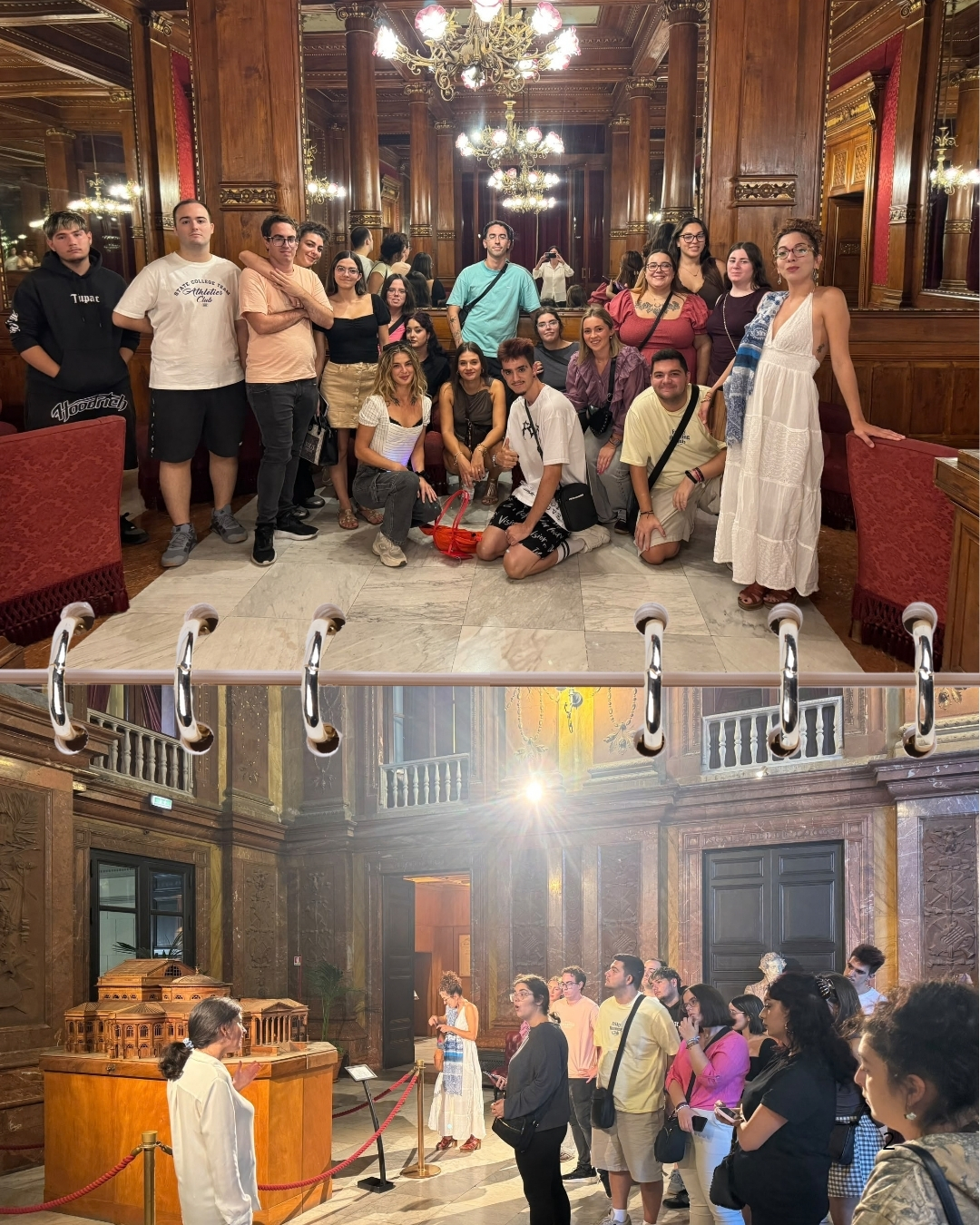
On Sunday, 27 September, the young people taking part in the ALMA project visited the Teatro Massimo, one of Palermo’s most important and recognisable landmarks. Organised by FICUS ETS, the visit marked the beginning of a cultural programme designed to help participants discover the city and the many stories that have shaped it.
Visiting a place means more than looking at its architecture. It is a way to connect with the history, traditions and identity of the local area. The project’s cultural activities give participants the chance to experience Palermo first-hand, learn about its roots and build a closer connection with the city where they are living during their stay.
The Teatro Massimo tells an important part of Palermo’s story. Inaugurated in 1897, it is the largest opera house in Italy and one of the largest in Europe. Its impressive façade, grand staircase and richly decorated interiors reflect the value the city has long placed on culture and the arts. The theatre is part of Palermo’s shared memory and remains a central venue in the city’s cultural life.
During the visit, the young people explored the theatre and paused to look at the details that caught their attention. Its scale, decorations and atmosphere prompted curiosity and conversation. Sharing their impressions, asking questions and discussing what they saw made the visit an active experience: not simply a tour, but a chance to learn and exchange ideas.
These experiences are especially meaningful for people who have arrived from another country and are getting to know a new city. Through its monuments, neighbourhoods, green spaces and everyday meeting places, Palermo reveals itself as a city shaped by the encounter of different peoples, languages, traditions and cultures. Discovering the city also means recognising the contributions each of these influences has made to its heritage and identity.
Cultural visits bring the history of the local area into conversation with the participants’ own experiences. The young people can compare what they discover with the places and traditions of their own communities, share different perspectives and feel part of the city that welcomes them. Learning about local heritage can build connections between cultures: it sparks curiosity, encourages dialogue and creates opportunities to learn from one another.
The visit to the Teatro Massimo was the first stop in a programme that will continue this Sunday with a visit to the Palermo Botanical Garden. After exploring the city through its history and artistic life, the group will have the opportunity to discover its natural heritage and learn about a garden where plant species from many parts of the world grow side by side. The Botanical Garden also offers a way to reflect on the diversity and connections that are part of Palermo’s identity.
Through these activities, FICUS ETS is accompanying ALMA participants as they discover the local area and take part in experiences that encourage learning, participation and connection. Getting to know a city also means being open to its places, listening to its stories and discovering, step by step, what can bring people and cultures together.
The ALMA project is part of ALMA Andalucía – ESF+ Andalucía 2021–2027, promoted by the Regional Government of Andalusia and co-funded by the European Social Fund Plus (ESF+).
Project reference: SC/IAA/0013/2025
